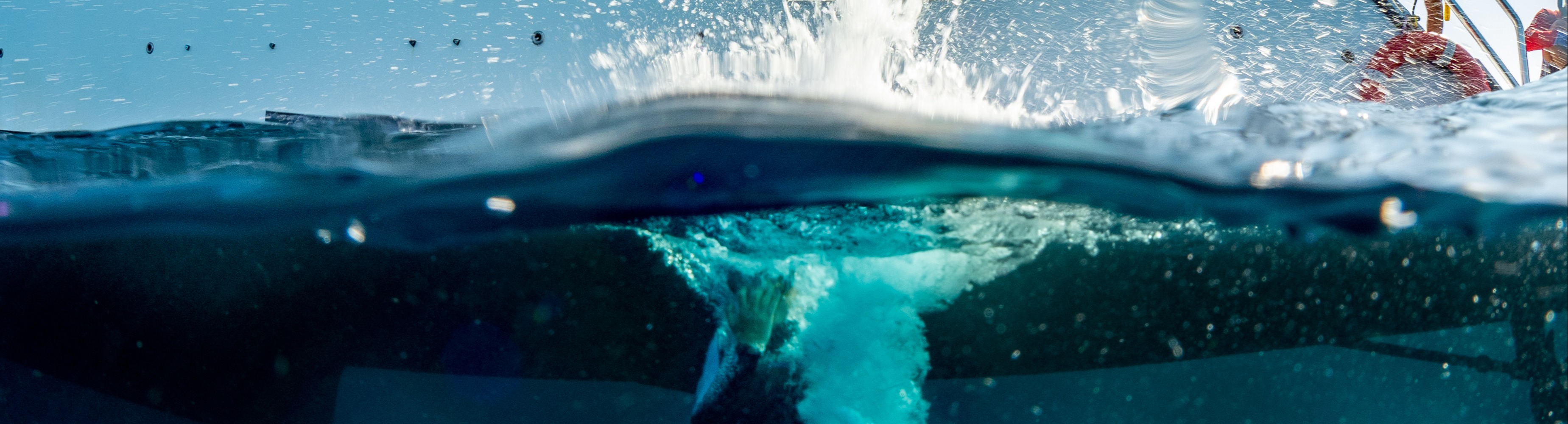
From 28 April to 27 May 2026, HaBB lab took part in OceanX’s Palau mission aboard the OceanXplorer, a two-leg Bioblitz in collaboration with the Florida Museum of Natural History. Using ROVs, submersibles, SCUBA, BRUVs and helicopter surveys, the team documented bathyal and nearshore habitats around Palau, focusing on octocorals, black corals, scleractinian corals and stylasterids.
From 23rd of September to 13 October 2026, Nicolas took part in the CALOCHEST expedition to New Caledonia, in collaboration with IRD and Aix-Marseille University, visiting the Chesterfield Islands. The mission aimed to resample Pocillopora populations first collected 10-12 years ago, allowing a temporal comparison of their genetic structure and diversity. Over 700 coral specimens were collected, including scleractinians, octocorals, antipatharians and stylasterids, for our projects at KAUST.
From November 8 to 23, 2025, HaBB lab joined OceanX’s Timor-Leste mission aboard the OceanXplorer, a biodiversity survey led by the Florida Museum of Natural History in the heart of the Coral Triangle. Using SCUBA, ROVs and submersibles, the international team documented shallow-reef and deep-sea fauna around Atauro Island and north of Dili, focusing on poorly known bathyal habitats. Our lab focused on cnidarians, to be studied at KAUST through morphological and molecular analyses.
From May 23 to June 1, 2021, KAUST HaBB lab and Red Sea Global surveyed the coral reefs of the Al Wajh area in the northern Saudi Red Sea. The team combined structure-from-motion photogrammetry, fish surveys and drone mapping to describe benthic communities, reef structure and fish assemblages from 5 to 30 m depth, and collected corals and crabs for genetic and morphological analyses, building a baseline along a rapidly developing stretch of the Saudi coast.
A recurring KAUST cruise surveys coral reefs of the central Saudi Red Sea between Thuwal and Yanbu, revisiting the same inshore, mid-shelf and offshore sites across editions (2020, 2022). Using SCUBA, structure-from-motion photogrammetry and drone imagery, the team describes coral communities, reef structure and complexity across latitudes, building a time series to track change, including the effects of the 2020 bleaching event.
Cruise M193 (REPLENISH) aboard RV Meteor, a collaboration between KAUST, ZMT, MARUM and the University of Hamburg (Sep 8 to Oct 6, 2023), explored the Al Wajh carbonate platform in the northern Red Sea. Seismic data and gravity cores record how Pleistocene monsoon-driven humid and arid phases shaped shallow- and deep-water carbonates. Seven ROV dives, from 1,360 to 93 m, surveyed largely unstudied deep and mesophotic benthic habitats, including warm, high-salinity deep-sea coral assemblages.
From October 1 to November 15, 2020, the Deep Blue Expedition, a collaboration between KAUST, NEOM and OceanX aboard the OceanXplorer, explored understudied deep-sea ecosystems of the northern Red Sea and Gulf of Aqaba, from the continental shelf to over 700 m. Using ROVs, crewed submersibles and seafloor mapping, the team documented benthic habitats, corals and geomorphology, alongside oceanographic data and specimens, producing one of the most comprehensive datasets for the region.